Blog

  • Dental veneers in Chișinău – what they are, when they are worth considering, and what you should know before transforming your smile

    Dental veneers in Chișinău – what they are, when they are worth considering, and what you should know before transforming your smile

    More and more patients in Chișinău are choosing dental veneers to achieve a more aesthetic and harmonious smile.

    Social media and dramatic smile transformations have made this treatment increasingly popular, but many patients still do not fully understand what the procedure involves or whether it is the right option for them.

    Dental veneers can provide excellent results, but proper planning and the right approach are essential.


    What are dental veneers?

    Dental veneers are very thin shells made from ceramic or composite materials that are bonded to the front surface of the teeth.

    They are used to correct:

    • tooth color
    • tooth shape
    • spaces between teeth
    • minor alignment imperfections
    • chipped or worn teeth

    The result is a more balanced and attractive smile.


    What materials are veneers made from?

    The most common types are:

    Ceramic veneers

    • highly natural appearance
    • excellent durability
    • long-term color stability

    Composite veneers

    • lower cost
    • faster treatment process
    • lower durability compared to ceramic veneers

    The right choice depends on the patient’s goals and clinical situation.


    When are dental veneers recommended?

    Veneers may be a good option for patients with:

    • stained teeth that do not respond to whitening
    • small gaps between teeth
    • uneven or worn teeth
    • minor chips or cracks
    • the desire for a fast cosmetic improvement

    When are veneers not recommended?

    Veneers are not suitable in every case.

    They may not be recommended for patients with:

    • untreated cavities
    • gum disease or periodontal problems
    • severe bruxism
    • poor oral hygiene

    In these situations, the underlying issue should be treated first.


    Do teeth need to be shaved down?

    In many cases, yes — but only minimally.

    A thin layer of enamel is usually prepared to allow proper placement of the veneers.

    Some patients may qualify for minimally invasive veneers with very limited tooth preparation.


    How long do veneers last?

    Their lifespan depends on the material and maintenance.

    In general:

    • ceramic veneers can last 10–15 years or longer
    • composite veneers usually have a shorter lifespan

    Proper care has a major impact on durability.


    How should veneers be maintained?

    • maintain good oral hygiene
    • attend regular dental check-ups
    • avoid aggressive habits (nail biting, opening objects with teeth)
    • wear a night guard if bruxism is present

    Do veneers look natural?

    Modern veneers, when properly designed and placed, can look extremely natural.

    Smile planning and the correct choice of shape and color are essential for achieving a harmonious result.


    Conclusion

    Dental veneers can significantly improve both the appearance of the smile and patient confidence.

    For patients in Chișinău, choosing the right treatment plan and aesthetic approach is essential for obtaining a natural and long-lasting result.

    A dental consultation can help determine the most suitable solution for each individual case.

  • How long does a dental implant last in Chișinău and what affects its lifespan – real factors that determine long-term success and durability

    How long does a dental implant last in Chișinău and what affects its lifespan – real factors that determine long-term success and durability

    One of the most common questions patients ask is:
    “How long does a dental implant last?”

    For many patients in Chișinău, dental implants represent a significant investment, so durability is a key factor when making a decision.

    The short answer is:
    a dental implant can last for decades, and in some cases even a lifetime.

    However, the actual lifespan depends on several important factors.


    What is the average lifespan of a dental implant?

    Clinical studies show that:

    • the success rate is over 95%
    • most implants last more than 10–15 years
    • under optimal conditions, they can last 20–30 years or longer

    The exact lifespan varies from patient to patient.


    What affects the lifespan of a dental implant?

    1. Oral hygiene

    One of the most important factors.

    Bacteria and plaque can lead to inflammation and implant failure.


    2. Dentist’s experience

    Proper planning and precise placement are essential.

    A well-positioned implant has a much higher chance of long-term success.


    3. Bone quality

    The implant must be well supported by the bone.

    In some cases, bone grafting may be required.


    4. Lifestyle

    Smoking and stress can negatively affect healing and gum health.


    5. Long-term maintenance

    Regular dental check-ups and professional cleanings are essential.


    Can a dental implant fail?

    The implant itself (the titanium screw) is very durable.

    However, complications may occur, such as:

    • inflammation around the implant (peri-implantitis)
    • loosening of the crown
    • wear of the prosthetic components

    These issues can often be treated if detected early.


    What is the role of the dental crown?

    In most cases, the crown is the first component that may need replacement.

    Its average lifespan is:

    • around 10–15 years, depending on use and materials

    The implant itself usually remains in place, and only the crown is replaced.


    How can you extend the lifespan of a dental implant?

    • maintain good oral hygiene
    • use proper brushing and interdental cleaning
    • attend regular dental check-ups
    • avoid smoking
    • treat bruxism if present

    Signs of potential problems

    You should see a dentist if you notice:

    • bleeding gums around the implant
    • mobility (rare but serious)
    • pain or discomfort
    • bad taste or odor

    Early intervention can prevent more serious complications.


    Conclusion

    A dental implant is one of the most durable solutions in modern dentistry.

    For patients in Chișinău, its lifespan largely depends on proper care and the quality of the treatment performed.

    With the right maintenance, a dental implant can last for decades and become a long-term solution.

  • Full mouth dental implants in Chișinău (All-on-4, All-on-5, All-on-6) – what these systems mean, who they are for, and how to choose the right solution for fixed teeth in 24 hours

    Full mouth dental implants in Chișinău (All-on-4, All-on-5, All-on-6) – what these systems mean, who they are for, and how to choose the right solution for fixed teeth in 24 hours

    Losing all teeth or having severely damaged dentition can significantly affect quality of life.

    Many patients in Chișinău are looking for a fixed, stable, and aesthetic solution without removable dentures.

    In this context, modern full mouth implant systems — All-on-4, All-on-5, and All-on-6 — are among the most effective options for complete dental restoration.


    What do All-on-4, All-on-5, and All-on-6 mean?

    These concepts refer to the number of implants used to support a full fixed prosthesis on one arch (upper or lower):

    • All-on-4 – supported by 4 implants
    • All-on-5 – supported by 5 implants
    • All-on-6 – supported by 6 implants

    A full set of teeth is then fixed on these implants, replacing the entire dental arch.


    Who are these solutions for?

    Full mouth implants are recommended for:

    • patients with complete tooth loss (edentulous patients)
    • patients with severely damaged teeth that cannot be saved
    • people who cannot adapt to removable dentures
    • patients who want a fixed, long-term solution

    In Chișinău, more and more patients are choosing these treatments for the comfort and stability they provide.


    What is the difference between All-on-4, All-on-5, and All-on-6?

    The main differences involve:

    Stability and load distribution

    • more implants = better distribution of chewing forces

    Bone availability

    • All-on-4 is often used when bone volume is limited
    • All-on-6 provides increased stability in favorable cases

    Long-term durability

    • systems with more implants may offer better long-term resistance

    The final choice depends on each patient’s anatomy and treatment plan.


    Can you get fixed teeth in 24 hours?

    In many cases, yes.

    The procedure typically includes:

    • placement of implants
    • attachment of a temporary fixed prosthesis on the same day

    This means the patient leaves the clinic with fixed temporary teeth, without a period of being without teeth.

    The final prosthesis is placed after the healing phase.


    How does the treatment process work?

    The main stages include:

    1. Consultation and diagnostic imaging (CT scan, planning)
    2. Extraction of compromised teeth (if needed)
    3. Implant placement
    4. Immediate temporary prosthesis
    5. Final prosthesis after healing

    Advantages of full mouth dental implants

    • fixed, stable teeth
    • natural appearance
    • improved comfort
    • efficient chewing
    • no removable dentures

    Are there any disadvantages?

    Like any medical treatment, there are some considerations:

    • requires a surgical procedure
    • higher initial cost
    • requires maintenance and regular check-ups

    How do you choose the right option?

    The decision between All-on-4, All-on-5, and All-on-6 depends on:

    • bone volume and quality
    • overall health
    • budget
    • patient expectations

    A full evaluation by an experienced implant specialist is essential.


    Conclusion

    Full mouth dental implants are one of the most advanced solutions for complete dental restoration.

    For patients in Chișinău, All-on-4, All-on-5, and All-on-6 systems provide the opportunity to regain fixed, comfortable, and aesthetic teeth in a relatively short time.

    A personalized treatment plan is key to achieving a safe and long-lasting result.

  • Common mistakes after dental implant surgery in Chișinău – what not to do after the procedure and how to ensure proper healing and long-lasting results

    Common mistakes after dental implant surgery in Chișinău – what not to do after the procedure and how to ensure proper healing and long-lasting results

    Dental implants are a safe and predictable solution, but long-term success depends not only on the procedure itself.

    Many patients in Chișinău make mistakes during the healing period without realizing it, which can affect how well the implant integrates with the bone.

    Following post-treatment instructions is essential for achieving a stable and durable result.


    Why is the healing period important?

    After the implant is placed, a process called osseointegration begins — this is when the implant bonds with the bone.

    This stage typically lasts:

    • between 2 and 6 months
    • depending on the patient and the complexity of the case

    During this time, the implant must be protected. Any excessive pressure or infection can compromise the outcome.


    The most common mistakes after dental implant surgery

    1. Chewing on the implant side too early

    Applying pressure on the implant in the first weeks can affect its stability.

    Recommendation: avoid chewing on the treated side until your dentist allows it.


    2. Poor oral hygiene

    Some patients avoid brushing due to fear, which leads to bacterial buildup.

    Recommendation: maintain careful oral hygiene according to your dentist’s instructions.


    3. Smoking after surgery

    Smoking reduces blood flow and slows down healing.

    It is one of the main risk factors for implant failure.


    4. Eating hard or very hot foods

    Hard or hot foods can irritate the surgical area and interfere with healing.

    Recommendation: follow a soft diet during the first days.


    5. Skipping follow-up appointments

    Many patients do not return for check-ups if they do not feel pain.

    Regular monitoring is essential for treatment success.


    6. Intense physical activity too soon

    Physical effort can increase the risk of bleeding and inflammation.

    Recommendation: avoid intense activity in the first days after surgery.


    What should you do instead?

    • follow your dentist’s instructions carefully
    • maintain proper oral hygiene
    • attend all recommended follow-up visits
    • adopt a suitable diet
    • avoid smoking and alcohol during healing

    When should you contact your dentist?

    You should seek professional care if you experience:

    • severe pain that does not improve
    • significant swelling
    • persistent bleeding
    • implant mobility

    Early intervention can prevent complications.


    Conclusion

    A dental implant is a long-term investment, and its success largely depends on how well you care for it after the procedure.

    For patients in Chișinău, following medical advice and attending regular check-ups are key to achieving a stable result.

    With proper care, a dental implant can last for decades.

  • Dental implant in Chișinău – when you need it, how the procedure works, and what you should know before treatment for a safe and long-lasting result

    Dental implant in Chișinău – when you need it, how the procedure works, and what you should know before treatment for a safe and long-lasting result

    Losing a tooth is not just an aesthetic issue, but also a functional one that can affect chewing, speech, and overall oral health.

    Today, a dental implant is considered the most modern and effective solution for replacing a missing tooth.

    Many patients in Chișinău ask:
    “When is the right time for a dental implant, and what does the procedure involve?”


    What Is a Dental Implant?

    A dental implant is an artificial titanium root placed into the jawbone to replace a missing tooth.

    A dental crown is then attached to the implant, restoring both function and appearance.


    When Do You Need a Dental Implant?

    Dental implants are recommended in cases such as:

    • missing one or more teeth
    • inability to use a dental bridge
    • desire for a long-term fixed solution
    • difficulty chewing

    The sooner the treatment is done after tooth loss, the better the outcome.


    How Does the Procedure Work?

    The dental implant process involves several stages:

    1️⃣ Consultation and Planning

    Diagnostic imaging (X-ray or CT scan) is performed, and a treatment plan is created.

    At this stage, evaluation by an implant specialist such as Vadim Guțu is essential for achieving a predictable and long-lasting result.

    2️⃣ Implant Placement

    The implant is placed into the bone through a minimally invasive procedure.

    3️⃣ Healing (Osseointegration)

    The implant integrates with the bone over a period of 2–6 months.

    4️⃣ Final Restoration

    A dental crown is attached to restore full function and aesthetics.


    Is the Procedure Painful?

    The procedure is performed under local anesthesia and is generally well tolerated.

    Any post-treatment discomfort is usually mild and can be managed with medication.


    How Long Does a Dental Implant Last?

    Modern dental implants have a success rate of over 95%.

    With proper care and regular dental check-ups, implants can last for decades, often a lifetime.


    What Influences the Success of a Dental Implant?

    The success of the treatment depends on several factors:

    • the experience of the dentist
    • bone quality and volume
    • oral hygiene
    • following post-treatment instructions

    For this reason, it is important to choose an experienced implantologist such as Vadim Guțu, who applies modern techniques and a precise treatment approach.


    Benefits of Dental Implants

    ✔ do not affect neighboring teeth
    ✔ prevent bone loss
    ✔ provide stability and comfort
    ✔ look natural


    Conclusion

    Dental implants are the closest solution to natural teeth and can significantly improve quality of life.

    For patients in Chișinău, choosing the right treatment plan and an experienced specialist is essential for long-term success.

    If you are considering a dental implant, a personalized consultation can help you understand your options and achieve the best result.

  • Chipped or Broken Tooth in Chișinău – what to do immediately, how to save your tooth, and when it becomes a real dental emergency

    Chipped or Broken Tooth in Chișinău – what to do immediately, how to save your tooth, and when it becomes a real dental emergency

    A chipped or broken tooth is one of the most common dental emergencies and can happen unexpectedly — while eating, during sports, or after an accident.

    In these situations, acting quickly can make the difference between saving and losing the tooth.

    Many patients in Chișinău are unsure what to do in the first moments after a dental injury.


    What Is a Tooth Fracture?

    A tooth fracture can range from a small crack to severe damage.

    Common types include:

    • minor chip (enamel only)
    • moderate fracture (dentin exposed)
    • severe fracture (nerve affected)
    • completely knocked-out tooth

    The severity determines the treatment approach.


    What Should You Do Immediately?

    Quick action is essential.

    ✔ 1. Save the broken piece (if available)

    If a part of the tooth has broken off, keep it in:

    • milk
    • saline solution
    • or saliva

    ✔ 2. Avoid chewing on the affected side

    This helps prevent further damage.

    ✔ 3. Rinse your mouth gently

    Use lukewarm water to clean the area.

    ✔ 4. See a dentist urgently

    The faster you reach a dentist in Chișinău, the higher the chance of saving the tooth.


    When Is It a Real Emergency?

    You should seek immediate care if:

    • there is severe pain
    • there is bleeding
    • the tooth feels loose
    • the nerve is exposed
    • a strong impact or trauma occurred

    These situations require urgent treatment.


    What Should You Avoid?

    ❌ ignoring the problem
    ❌ trying to fix the tooth yourself
    ❌ chewing on the damaged tooth
    ❌ delaying a dental visit


    How Is a Broken Tooth Treated?

    Treatment depends on the severity of the damage.

    ✔ Mild cases

    • polishing or cosmetic restoration

    ✔ Moderate cases

    • filling or dental crown

    ✔ Severe cases

    • root canal treatment
    • reconstruction or dental implant

    In many situations, the tooth can be saved if treated quickly.


    Can a Completely Knocked-Out Tooth Be Saved?

    Yes, in some cases.

    If the tooth is completely knocked out:

    • it must be stored properly
    • you should see a dentist within 1–2 hours

    This may allow successful reimplantation.


    How Can You Prevent This?

    ✔ avoid very hard foods
    ✔ wear protection during sports
    ✔ treat cavities early
    ✔ use a night guard if you have bruxism


    Conclusion

    A broken tooth is a dental emergency that should never be ignored.

    For patients in Chișinău, quick intervention can mean the difference between a simple treatment and a complex procedure.

    If you experience such a situation, seek dental care as soon as possible to protect your oral health.

  • Dental Night Guard (Mouth Guard) for Bruxism in Chișinău – what it is, when you need it, and how it helps relieve tooth and jaw pain

    Dental Night Guard (Mouth Guard) for Bruxism in Chișinău – what it is, when you need it, and how it helps relieve tooth and jaw pain

    Many patients in Chișinău experience tooth pain, sensitivity, or tension in the jaw without knowing the real cause.

    In many cases, the issue is bruxism — grinding or clenching the teeth, especially during sleep.

    One of the most effective solutions is a dental night guard (mouth guard).


    What Is a Dental Night Guard?

    A dental night guard is a transparent, custom-made device worn over the teeth.

    Its main purpose is to:

    • protect teeth from wear
    • reduce pressure on the jaw
    • prevent pain and damage

    It is most commonly used to manage bruxism.


    What Is Bruxism and Why Does It Happen?

    Bruxism refers to:

    • grinding teeth
    • clenching the jaw

    It usually happens during sleep, and many people are unaware they have it.

    Common causes include:

    • stress and anxiety
    • fatigue
    • bite misalignment
    • dental issues

    Signs You May Need a Night Guard

    You may need a dental guard if you notice:

    • jaw pain in the morning
    • frequent headaches
    • tooth sensitivity
    • visible tooth wear
    • grinding sounds during sleep (noticed by a partner)

    Many patients in Chișinău only discover bruxism after complications appear.


    How Does a Dental Guard Help?

    A night guard does not completely stop bruxism, but it protects the teeth and jaw effectively.

    Benefits:

    ✔ prevents tooth wear
    ✔ reduces jaw pain
    ✔ protects dental work (fillings, crowns)
    ✔ improves sleep quality


    Types of Dental Night Guards

    1️⃣ Custom-Made Night Guard (Recommended)

    • made by a dentist
    • perfectly fitted to your teeth
    • highly effective

    2️⃣ Over-the-Counter Night Guard

    • universal fit
    • less comfortable
    • limited protection

    For long-term results, a custom-made guard is strongly recommended.


    How Much Does a Night Guard Cost in Chișinău?

    The cost varies depending on the material and customization.

    In general:

    • standard guards are more affordable
    • custom-made guards cost more but offer better results

    In the long term, a night guard can help prevent expensive dental treatments.


    How Long Should You Wear It?

    Typically:

    • worn at night
    • used daily, based on your dentist’s recommendation

    Results appear gradually as muscle tension decreases.


    What Happens If Bruxism Is Not Treated?

    Ignoring bruxism can lead to:

    • severe tooth wear
    • cracks and fractures
    • chronic jaw pain
    • temporomandibular joint (TMJ) problems

    Early treatment is much simpler and more effective.


    Conclusion

    A dental night guard is one of the simplest and most effective ways to protect your teeth from the effects of bruxism.

    For patients in Chișinău experiencing tooth pain or sensitivity, it can make a significant difference.

    A dental consultation can help identify the cause and provide the right treatment.

  • Dental Implant vs Dental Bridge – Which Should You Choose?

    Dental Implant vs Dental Bridge – Which Should You Choose?

    When you lose a tooth, one of the first decisions you need to make is how to replace it.

    The most common options are:

    • dental implants
    • dental bridges

    Many patients in Chișinău are unsure which solution is best for them.

    In this article, we explain the differences, advantages, and when each option is recommended.


    What Is a Dental Implant?

    A dental implant is an artificial titanium root that is placed into the jawbone, with a crown attached on top.

    It is the most modern solution and closely mimics a natural tooth.


    What Is a Dental Bridge?

    A dental bridge is a fixed restoration supported by the neighboring teeth.

    To place a bridge, the adjacent teeth must be reshaped (filed down) to support the structure.


    The Main Difference

    👉 A dental implant replaces the missing tooth without affecting neighboring teeth
    👉 A dental bridge requires modifying healthy adjacent teeth


    Advantages of Dental Implants

    ✔ do not affect neighboring teeth
    ✔ help prevent bone loss
    ✔ long-lasting solution
    ✔ natural appearance

    Dental implants are considered the closest alternative to natural teeth.


    Advantages of Dental Bridges

    ✔ lower initial cost
    ✔ faster treatment time
    ✔ no surgical procedure required

    For some patients, this can be a practical short-term solution.


    Disadvantages of Each Option

    Dental Implant

    • requires healing time
    • involves a surgical procedure
    • higher initial cost

    Dental Bridge

    • affects healthy teeth
    • does not prevent bone loss
    • shorter lifespan

    When Is a Dental Implant Recommended?

    A dental implant is ideal when:

    • there is sufficient bone volume
    • the patient wants a long-term solution
    • the neighboring teeth are healthy

    When Is a Dental Bridge Recommended?

    A dental bridge may be suitable if:

    • implant placement is not immediately possible
    • there are budget limitations
    • neighboring teeth already require treatment

    What Do Most Patients Choose?

    In recent years, more patients in Chișinău are choosing dental implants due to their durability and long-term comfort.


    Conclusion

    Both dental implants and bridges are effective solutions for replacing missing teeth, but the right choice depends on each patient’s situation.

    Dental implants offer a long-term solution that preserves natural tooth structure, while bridges can be a faster and more affordable option.

    A dental consultation can help you choose the best option for your needs.

  • Why Do Teeth Hurt When You Eat or Drink Something Hot or Cold? Causes and Solutions

    Why Do Teeth Hurt When You Eat or Drink Something Hot or Cold? Causes and Solutions

    Tooth sensitivity to hot or cold is one of the most common dental problems patients experience.

    Whether it happens when drinking cold water, eating ice cream, or having hot beverages, this reaction should not be ignored.

    Many patients in Chișinău think it is “normal,” but in reality, it can be a sign of an underlying dental issue.


    What Is Tooth Sensitivity?

    Tooth sensitivity occurs when the protective layer of the tooth (enamel) is weakened, exposing the nerve endings.

    As a result, teeth may react to:

    • hot or cold foods and drinks
    • sweet or acidic foods
    • cold air

    The pain is usually sharp and short, but it can become more intense over time.


    Common Causes of Tooth Sensitivity

    1️⃣ Gum Recession

    When the gums recede, the root of the tooth becomes exposed and more sensitive.

    2️⃣ Enamel Wear or Erosion

    Frequent consumption of acidic drinks (such as soda or citrus juices) can damage enamel.

    3️⃣ Tooth Decay (Cavities)

    Even small cavities can lead to sensitivity, especially to cold or sweet foods.

    4️⃣ Aggressive Brushing

    Using a hard toothbrush or brushing too hard can wear down enamel.

    5️⃣ Bruxism (Teeth Grinding)

    Grinding your teeth can cause micro-cracks and increased sensitivity.


    When Should You See a Dentist?

    You should schedule a dental visit if:

    • the pain lasts for several days
    • sensitivity becomes stronger
    • it appears without a clear trigger
    • it is localized to a specific tooth

    In Chișinău, many patients delay their visit, which can make the problem worse over time.


    How Is Tooth Sensitivity Treated?

    Treatment depends on the underlying cause.

    ✔ Toothpaste for Sensitive Teeth

    Specialized toothpaste can help reduce sensitivity temporarily.

    ✔ Professional Treatment

    Dentists can apply protective agents to reduce nerve exposure.

    ✔ Treating the Root Cause

    • fillings for cavities
    • gum treatment
    • night guards for bruxism

    What Should You Avoid?

    ❌ ignoring the problem
    ❌ relying only on temporary solutions
    ❌ delaying a dental visit

    Tooth sensitivity is a symptom, not a diagnosis.


    How to Prevent Tooth Sensitivity

    ✔ brush your teeth twice a day
    ✔ use a soft-bristled toothbrush
    ✔ limit acidic foods and drinks
    ✔ visit your dentist regularly


    Conclusion

    Tooth pain caused by hot or cold stimuli is not normal and should not be ignored.

    In many cases, the problem can be treated easily if detected early.

    If you are experiencing these symptoms, a dental consultation in Chișinău can help identify the cause and provide the right treatment.

  • What Is Digital Dentistry and Why Does It Matter for Patients?

    What Is Digital Dentistry and Why Does It Matter for Patients?

    Modern dentistry has evolved significantly in recent years, and one of the most important advancements is digital dentistry.

    Many patients in Chișinău have heard this term, but don’t fully understand what it means.

    Is it just a trend, or does it actually improve treatment?

    The answer is clear: digital dentistry completely transforms the patient experience, from diagnosis to final results.


    What Is Digital Dentistry?

    Digital dentistry refers to the use of advanced technologies for:

    • precise diagnosis
    • computer-guided treatment planning
    • creating dental restorations using digital systems

    Instead of traditional methods, dentists use 3D scanners, digital imaging, and specialized software to deliver more accurate and predictable treatments.


    What Technologies Are Used?

    In a modern dental clinic in Chișinău, digital dentistry includes:

    • intraoral 3D scanning (no more uncomfortable impressions)
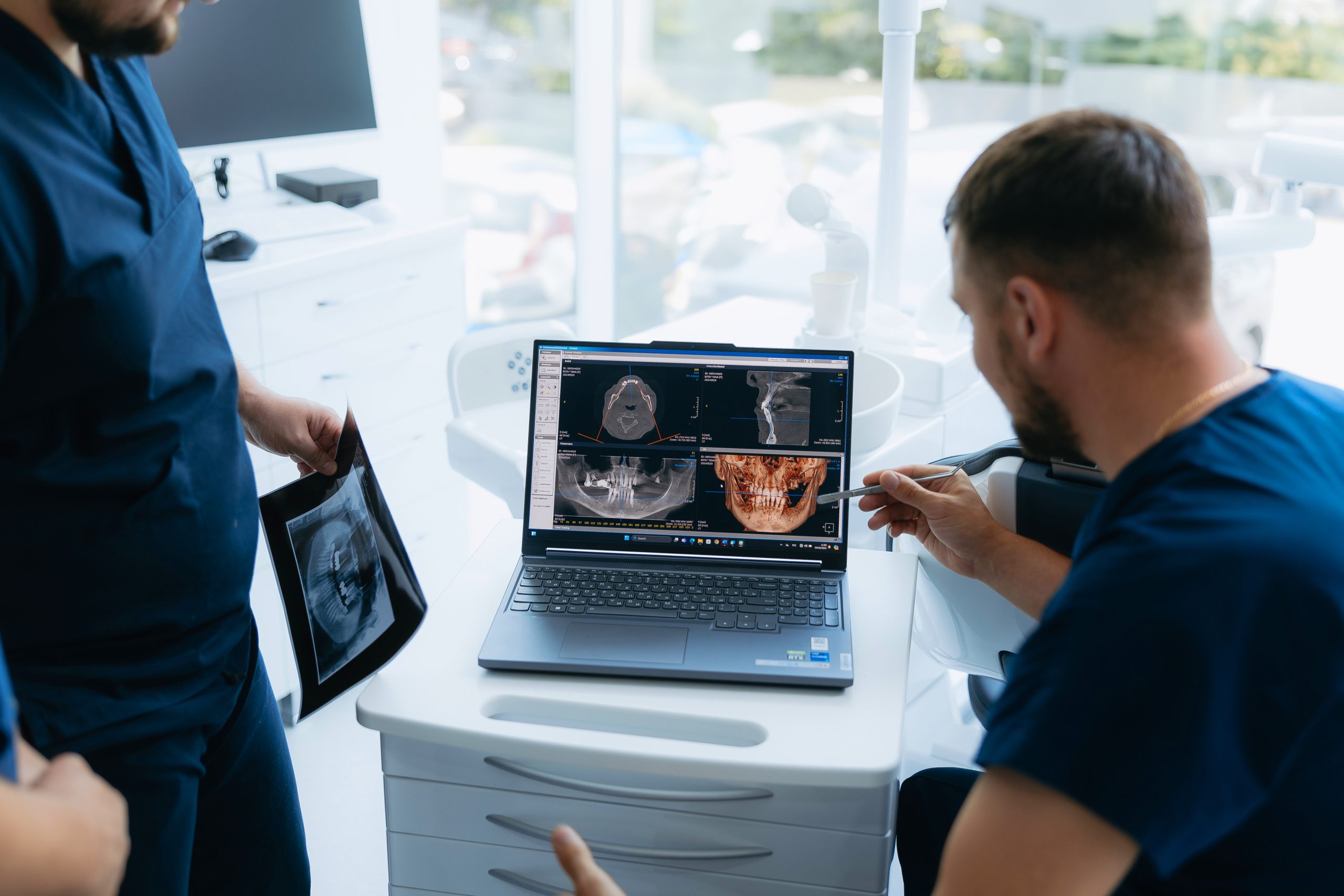
    • digital X-rays and CBCT (3D imaging)
    • digital implant planning
    • CAD/CAM systems for dental restorations
    • digital smile design simulations

    These technologies allow dentists to analyze each case in detail and plan every step with precision.


    What Are the Benefits for Patients?

    Digital dentistry is not just about technology — it’s about comfort, safety, and better results.

    ✔ Greater precision

    Treatment is digitally planned, reducing the risk of errors.

    ✔ Improved comfort

    Digital scans replace traditional impressions, which many patients find uncomfortable.

    ✔ Predictable results

    Patients can preview their future smile before treatment begins.

    ✔ Faster treatment

    Procedures are more efficient and often require fewer visits.

    ✔ Modern experience

    The entire process is clearer, easier, and more patient-friendly.


    Digital Dentistry in Implantology

    In dental implant treatments, digital technology plays a crucial role.

    Dentists can:

    • plan the exact implant position using 3D models
    • use surgical guides for precise placement
    • reduce surgery time and risks

    This leads to faster healing and more reliable outcomes.


    Is Digital Dentistry More Expensive?

    Treatments involving digital technology may sometimes have a slightly higher cost.

    However, this comes with important advantages:

    • fewer adjustments or corrections
    • longer-lasting results
    • time savings

    In the long term, it is often a more efficient investment.


    Who Is Digital Dentistry For?

    Digital dentistry is suitable for:

    • patients who want precise and fast treatments
    • people with dental anxiety (more comfortable procedures)
    • complex cases (implants, veneers, full-mouth restorations)

    In fact, it is becoming the new standard in modern dentistry.


    Conclusion

    Digital dentistry is not just an innovation — it represents a complete transformation in how dental treatments are performed.

    For patients in Chișinău, this means:

    ✔ higher precision
    ✔ greater comfort
    ✔ faster and more predictable results

    If you are looking for modern, reliable dental care, choosing a clinic that uses digital technologies can make a significant difference.